Is It Time for Accrual Accounting?
Cash-basis books are simple, but they can hide what’s really happening in your business. Learn the difference, the signs you’ve outgrown cash accounting, and how to make the switch.
Zentavos CFO Team
2 min read
Most small businesses start on cash-basis accounting, and for good reason: it’s simple. Money comes in, you record income. Money goes out, you record an expense. Your books look a lot like your bank account.
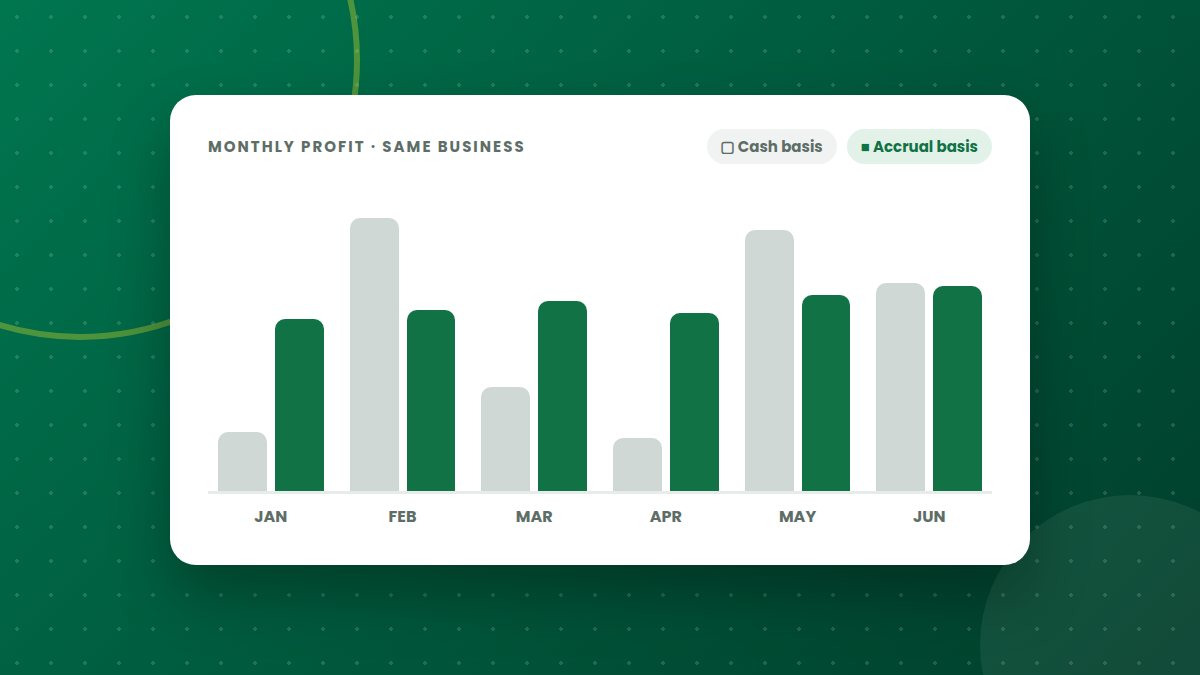
But as a business grows, that simplicity can start to mislead you. A great month on paper might just mean three customers paid late invoices at once. A terrible month might be the month you prepaid a year of insurance.
Cash vs. accrual in one example
You finish a $10,000 project in March and the client pays in May. On the cash basis, the $10,000 shows up in May. On the accrual basis, it shows up in March — when you earned it — and sits in accounts receivable until it’s paid. Expenses work the same way: accrual records a bill when you incur it, not when you pay it.
Signs you’ve outgrown cash accounting
You invoice customers and wait 30, 60 or 90 days to get paid.
You carry inventory or buy materials well before you sell.
Your monthly profit swings wildly even though the work feels steady.
You’re applying for a loan or line of credit — lenders often want accrual-based financial statements.
You’re thinking about selling the business or bringing in investors.
Your revenue is growing fast and you need to know which jobs are actually profitable.
What the tax rules say
Many small businesses can choose either method for taxes. Larger businesses — generally those whose average annual gross receipts are above an inflation-adjusted threshold that is currently around $30 million — and certain other entities must use accrual. Businesses with inventory have special rules. Your books and your tax return don’t always have to use the same method, so it’s worth deciding each one on purpose.
Changing the method used on your tax return usually requires filing a change request with the IRS, so plan the switch with your CPA rather than flipping a setting mid-year.
How to make the switch
Pick a clean start date — the first day of a quarter or fiscal year works best.
Record every open customer invoice as accounts receivable and every unpaid bill as accounts payable.
Set up accruals for recurring costs like payroll that spans month-end, and spread prepaid expenses such as insurance across the months they cover.
Review a month-end close checklist every month so nothing slips.
Keep watching cash separately — accrual profit and cash in the bank are different numbers, and you need both.
Profit is an opinion. Cash is a fact. Accrual books give you a better opinion — your cash report keeps you honest.
The bottom line
If you send invoices, carry inventory, or plan to borrow or sell, accrual accounting will give you a truer picture of your business. With a CFO Subscription, Zentavos handles the conversion and keeps your books on accrual every day, while your cash-flow view in the app stays up to date.
This article is general information, not tax, legal or investment advice. Every business is different — talk with your Zentavos CPA before making decisions.
NEXT ARTICLE
Why Is It So Hard to Save Money?